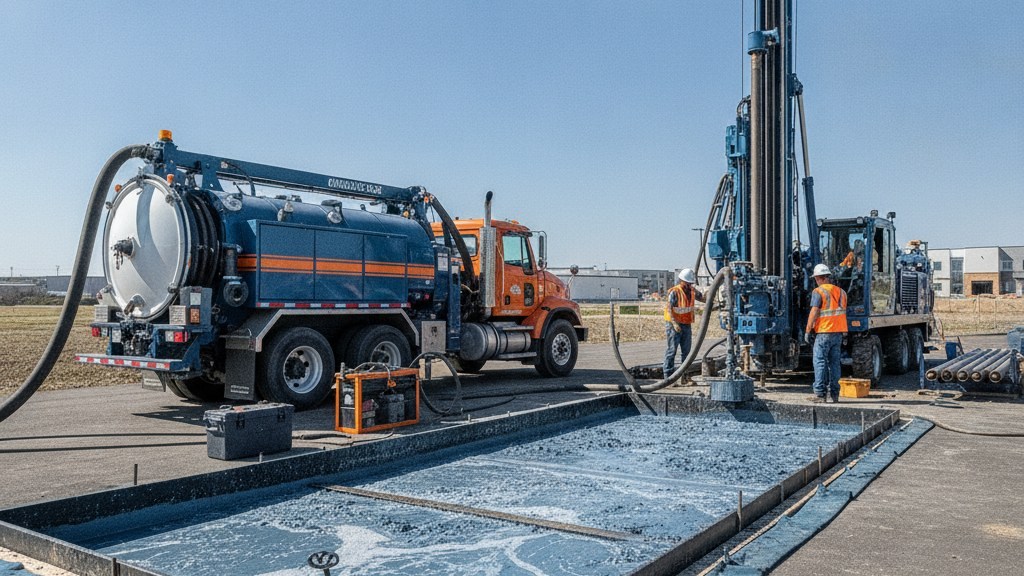
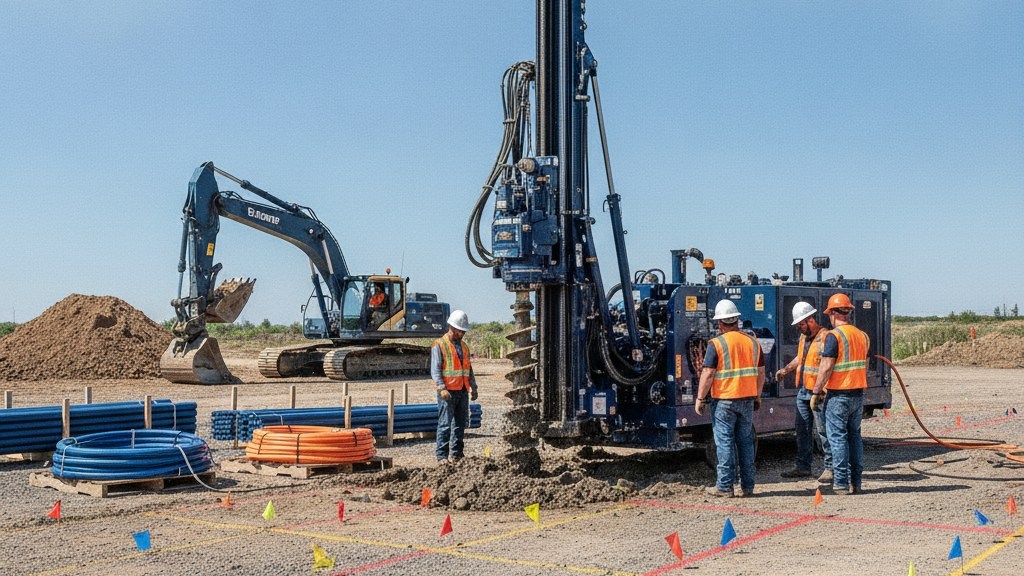
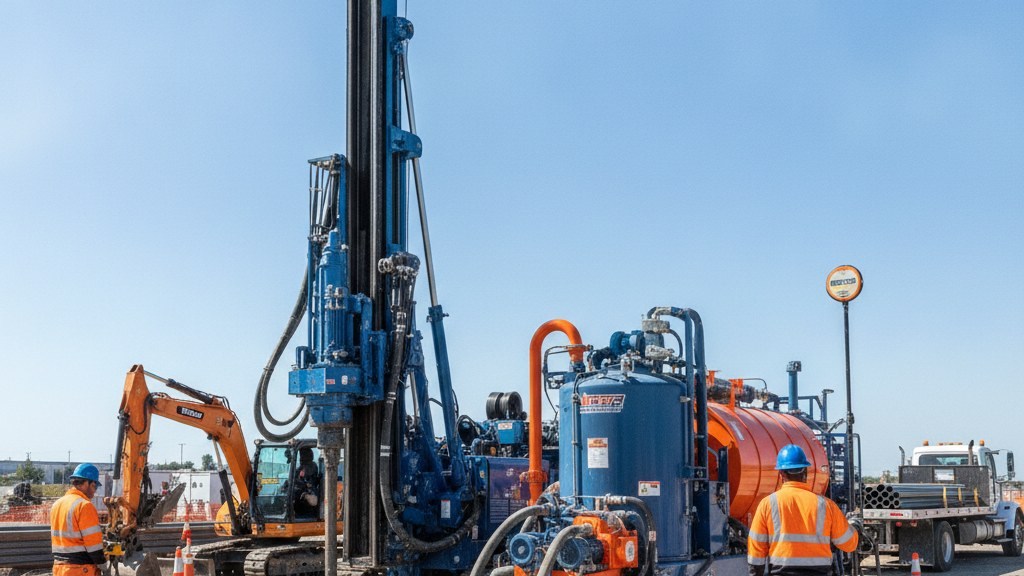
It's one of the most dangerous assumptions in directional drilling: that your general liability policy will cover you when you strike an existing utility. In reality, standard GL frequently excludes exactly that loss — because of two exclusions every bore contractor should understand: care, custody, and control, and below-grade/underground. Here's how the gap works and how to close it.
The utility strike is the everyday exposure
Directional drilling means boring through ground full of existing gas, fiber, water, sewer, and electric lines. Even with a clean 811 locate and diligent potholing, the risk of a strike is present on every job, and the consequences scale fast — a fiber cut can interrupt service to thousands and trigger steep revenue-loss claims, a gas strike is a safety emergency, a water strike floods and damages property. The financial exposure from one strike can exceed the value of the entire bore.
What care, custody & control means
Care, custody, and control (CCC) refers to property that's in your control while you work on or around it. Standard liability policies exclude damage to such property, on the logic that property in your hands is your responsibility to handle correctly. For a bore contractor, that captures the utility you're installing and the existing lines in your bore path — precisely the property most at risk on an underground job. So the CCC exclusion carves out coverage exactly where you're most exposed.
The below-grade exclusion compounds it
On top of CCC, many standard policies apply below-grade or underground exclusions that limit or remove coverage for damage occurring below the surface. Between the two, a bore contractor relying only on a standard GL can find that the damage to a struck utility — the core claim of underground work — is excluded, while the policy might pick up only some resulting third-party damage. That's a gap right at the center of the trade's biggest exposure.
How to close the gap
Closing it requires specific coverage: below-grade and care-custody-control endorsements or buy-backs that insure damage to the utilities you work on and around, coordinated with your general liability and your pollution coverage. Built correctly, a utility strike is covered the way the work demands — the struck line, the resulting damage, and the downstream service-interruption claims — rather than denied on an exclusion. This is one of the most important things an HDD-specific insurance program does.
- Below-grade / underground exclusion buy-backs.
- Care, custody & control coverage for lines you work on and around.
- Coordination with GL (resulting damage) and pollution (frac-out).
- Limits sized to the utilities you bore near and the consequences of a strike.
Don't find out at claim time
The worst time to discover a CCC or below-grade exclusion is after a strike. If you're not certain your program actually covers a utility strike, it's worth a review. Call 844-967-5247 or request a free quote and we'll check your coverage for these gaps and close them.
Get a free quote for your bore operation
Talk to a specialist about pollution, equipment, underground-utility, and the full coverage an HDD operation needs. Free, no obligation — usually same day.